By Part 61 Pilot
November 21. 2026
My first intro flight was out of a small untowered airport. The instructor was a retired United Airlines 777 captain, and as we were lining up with the centerline on the runway, he looked over at me and said, “Okay, gradually increase the power and I’ll tell you when to rotate.” Hold on—so I’m doing the takeoff? With no prior training or experience? This is literally my first time in a cockpit.
I’m certain the instructor was actually handling the controls because my eyes were fixed to the end of the runway and then I remember the plane began climbing smoothly and I became hooked on that feeling of soaring the skies.
At the time I was working full time as a first responder, but I had always thought about flying in the back of my head. After the discovery flight, I knew this was what I wanted to do. So, what was next on the list? Finding a flight school! But where, who, and why mattered.
I didn’t know what the costs would be, what the difference between Part 141 and Part 61 was, or where I go to find out more information on the internet. That’s why I created this blog; I wanted to document and share training highlights for every pilot.
I did what many prospective aspiring pilots do: I researched the internet to find out costs. Some schools offer cheaper rates than other schools, Reddit has forums with multiple answers that can be overwhelming, but the general consensus is that for the Private Pilot License, 10,000 to 25,000 dollars is the range of what it’ll cost depending on where, who, and what you’re training in.
These are 3 things that yes, the internet outlines, but I also experienced firsthand and want to pass on the knowledge to you, so you can make a more informed decision before committing.
- Advertised Pricing is Not the Final Price Tag.
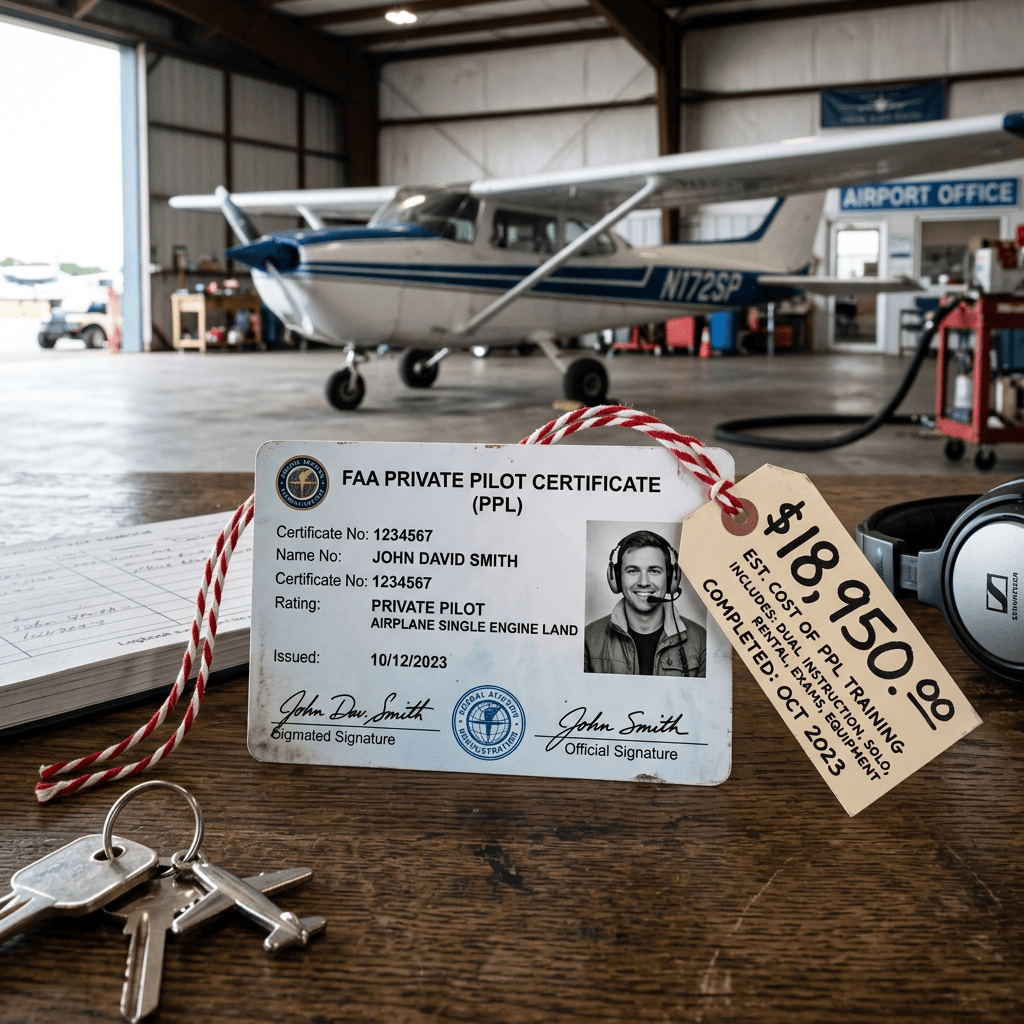
Flight training is incredibly expensive. However, it is an investment into your education. How are we even comfortable in the first place coughing up the amount money required to be licensed as a private pilot? Simple, it is through marketing.
Well designed websites and highlighted brochures make a flight school look professional. And some marketing techniques include price quoting as a way to be transparent with potential customers. Here’s the catch: that is not the real price.
Most flight schools calculate the cost of their program by the FAA minimums of how many flight hours are needed in order to be licensed as a private pilot. This is the absolute flight hour minimums. What even is a flight hour? A flight hour is calculated from the moment an aircraft engine is started and to when it is turned off. Not the in-between, as in the pre-flight, classroom, and post-flight debrief.
The FAA set the private pilots at the minimum of 40 hours or less, but states the national average is 75 hours.
Okay, this can be confusing. If the school quotes a price for a service, shouldn’t I have my private pilot license after paying the quoted price to the school? No, be prepared to spend 1.5x or even 2x what the quoted price is.
Though flight training can cost nearly double what is advertised; why isn’t the national average price advertised, well simply put, that’ll scare potential customers away. And you may be wondering why or how could it cost nearly double? Because time equals money. The more time it takes you to become a pilot, the higher the costs will be. Why?
- The Weather Controls Your Training Schedule.
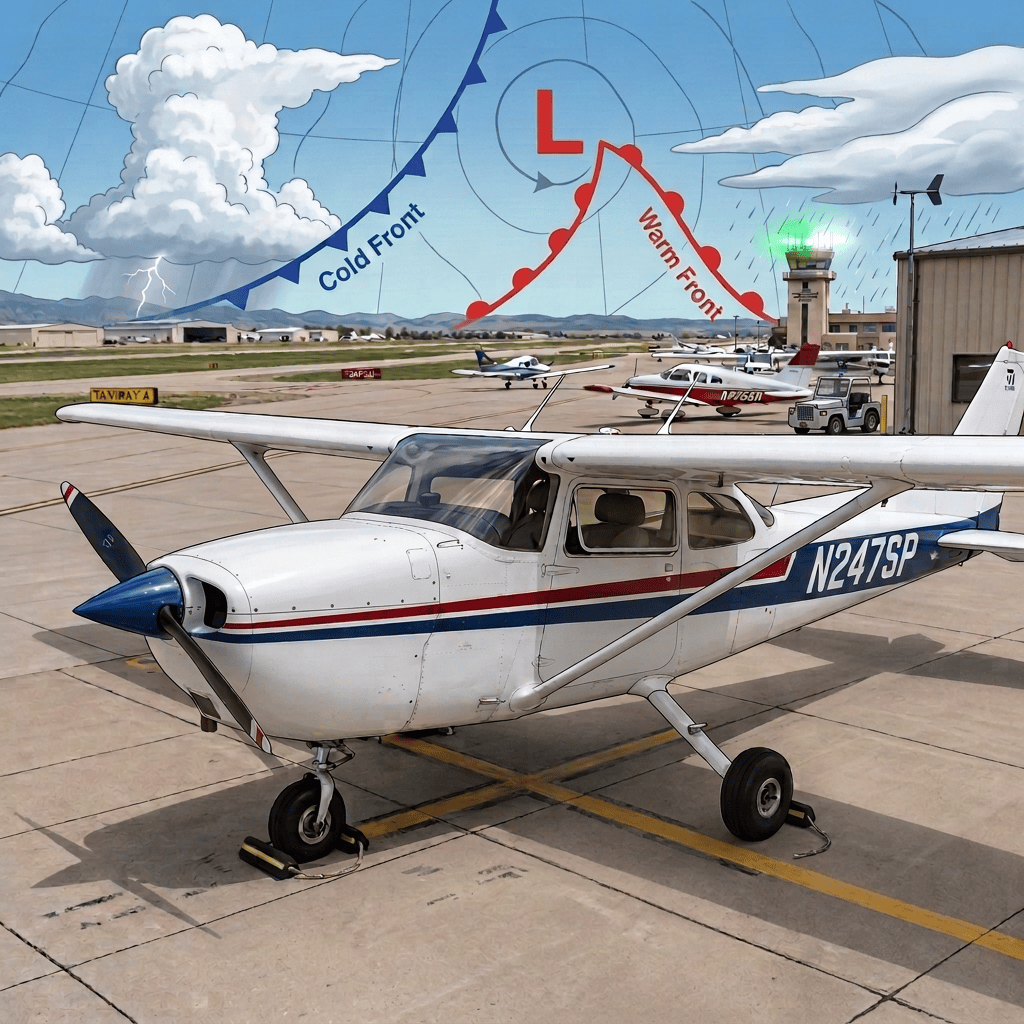
What does this mean? It was a huge shocker for me when I started training, and then during the winter months, there was thick blankets of winter fog that turned every airport and airspace into what is called referred to as instrument conditions almost every day. My flight hours halted. Simply put, if you don’t have an instrument rating and an instrument rated plane to fly through poor-visibility conditions, you’re not flying.
My training in the army, school, and work was not affected by everyday weather like rain, windy, or fog. But training for the private pilot’s license is the opposite; you absolute need good weather conditions to train. But what is considered good weather?
The private pilot license allows you to fly in what is called VFR, which stands for Visual Flight Rules. VFR means flying when the weather has generally clear skies, a specific amount of statute mile visibility and specific cloud clearance in order to fly. The statue mile visibility and cloud clearances depend on what airspace and airport you’re in. The Federal Aviation Regulations covers the specifics.
But if my instructor and the plane are both instrumented rated, doesn’t that mean we can fly in poor weather? The answer is no; as a student pilot, you are training for a private pilot license, and that license itself is only good for VFR weather.
If the weather cancels flight training for a whole week, that is a whole week’s worth of flight lessons that will need some form of catching up during the next lesson, whether it is checklists, radio, or flight controls skills. Whatever it may be that needs refreshing between lesson gaps, it’ll increase overall training costs.
So, what does this mean for the student pilot? Each flight lesson gap creates a little bit of rust in skill and knowledge; however, consistent training minimizes the amount of that rust settling.
It is important to know what the VFR weather minimums are, and how they apply to the flight school you are interested in, the airspace you’ll be training in, and what the historical weather patterns are like throughout the year.
In addition, ask the flight school: what is the general backup plan if a flight is cancelled based on weather? Do they default to classroom instruction, simulator training, or play it by ear?
- What About Funding Flight Training.
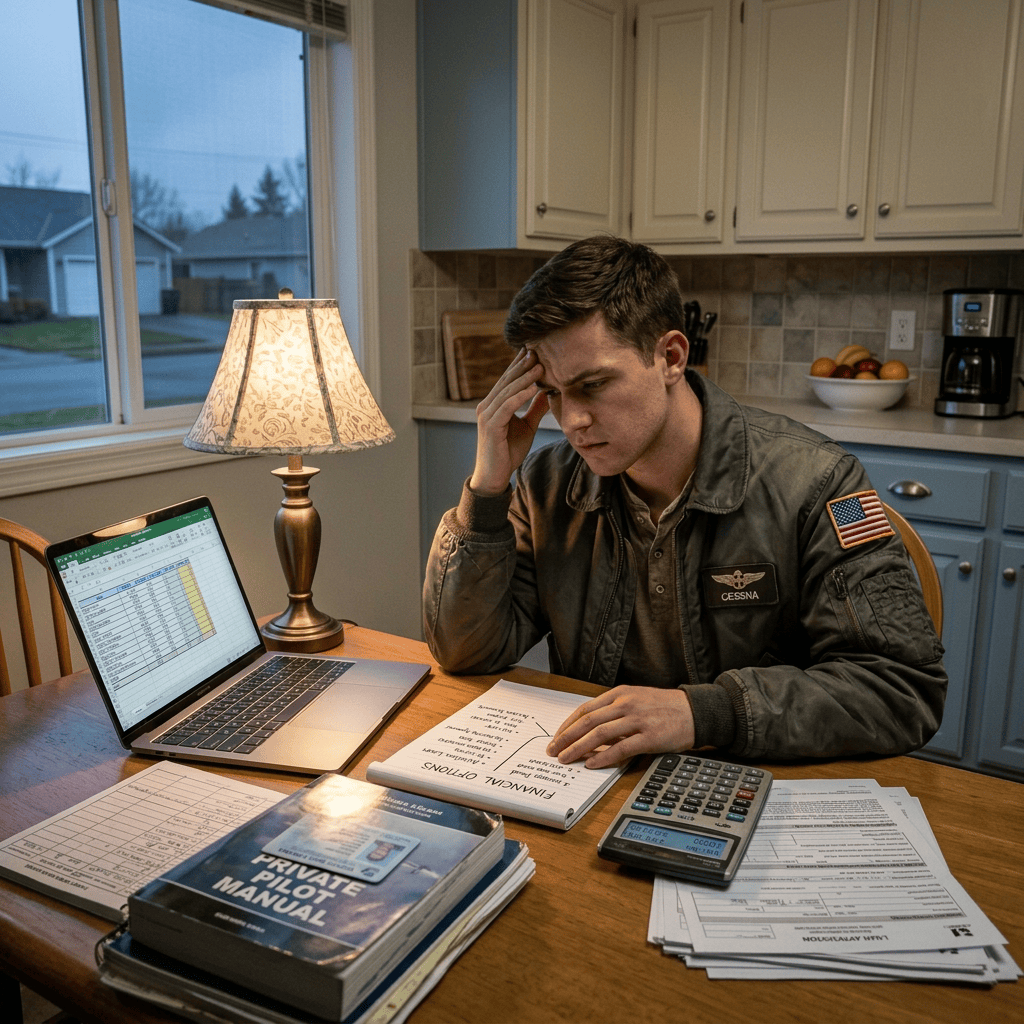
Is it better:
1) Pay out of pocket?
2) Pay as you go?
3) Take out a flight education loan?
It may be tempting to take on a flight loan to pay for all of training, hold the brakes on that idea. I took on a flight loan to pay for all of the pilot ratings. I know that feeling of pressure a looming debt can create before you are making meaningful payments towards the principal.
There are alternatives to this! Yes, scholarships do exist; that is free money that can be applied towards flight training. And if I had to do it again, I would’ve paid out of pocket for the private pilot license; however, let’s be realistic, not everyone can shell out 10,000 to 25,000 dollars like its pocket change.
Before you’d spend that amount whether its credit, savings, or a loan, consider paying for a few lessons out of pocket and get a feel that this flight school’s environment, quality of education, and the structure is right for you. But be aware of confirmation bias! It is a psychological term coined when look for and interpret information in a way that validates what we already believe is true.
During these first few lessons, instead of learning to fly, be an observer. This is key, take mental notes on the preparation of the flight school: how do staff interact with their students, how is the ground portion of the lesson presented, is the atmosphere relaxed or too much? Do you feel you would be supported if you were struggling with a certain lesson or concept? There are many variables. And at the end of the day, if you believe the school isn’t a right fit, it’s better to identify that early than being thousands of dollars deep in training.
Paying out of pocket or paying as you go at first can protect from not feeling stuck or attached at a one flight school and not dealing with the hassles of transferring loan disbursements to another school.
There is a reason the U.S. Military educational benefits for flight training are not applicable until the advanced ratings. There is a high-attrition rates with private pilot training. However, paying out of pocket or as you go can protect you finding out whether you want aviation to be a hobby or career.
Getting through your PPL is the ultimate filter. Once you have that certificate in hand and know for sure you want to pursue Instrument, Commercial, and CFI ratings professionally, taking on a loan becomes a calculated move.
With any loan, no one wants to go blindly into debt; however, a flight loan could cover the gap of what it’ll cost to be a pilot. Rather than thinking of a loan as crippling debt, it is an investment. That is the mindset you’ll need. But please consider taking a loan after you finished PPL, you’ll know for certain weather aviation will be a hobby or career.
A loan to fund an education where the payoff in career salary will be 8 to 10x what the loan originally costed is not only seen in aviation. Students of engineering, law, and medicine experience the same phenomenon: there is a heavy cost up front, however, the career earnings potential will significantly outpace the total cost of the loan through time and seniority.
These are the three things I wished I knew before I even started flight training. I hope this helped you. There are many resources online that go further with each tip to help formulate a more informed decision to do what is best for you and your future. Got questions about flight training or picking a school? Please leave a comment or send a message directly; you’re cleared for the option.


Leave a Reply